


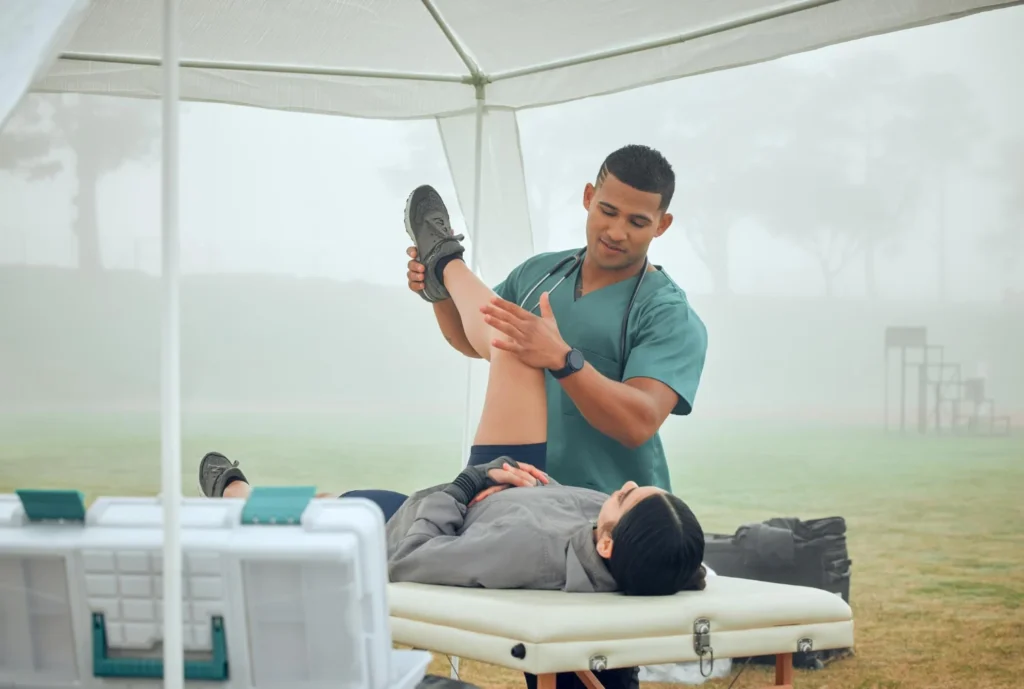
Sports Injury Rehabilitation: What to Expect in a Physiotherapy Program
Sports injuries are common among athletes, fitness enthusiasts, and even beginners who suddenly increase their activity level. Whether it’s a ligament sprain, muscle tear, tendonitis, or post-surgery recovery, proper rehabilitation is essential for safe and complete healing.
A structured physiotherapy rehabilitation program helps reduce pain, restore mobility, rebuild strength, and prevent future injuries. In this blog, we’ll explain what happens in a sports injury physiotherapy program and what you can expect during your recovery journey.
Understanding Sports Injuries
Common sports injuries include:
- Ankle sprains
- ACL tears
- Hamstring strains
- Tennis elbow
- Rotator cuff injuries
- Knee ligament injuries
Without proper treatment, these injuries can become chronic and affect long-term performance.
What Happens in a Physiotherapy Program?
A sports injury rehabilitation program is usually divided into phases. Each phase focuses on a specific goal to ensure safe recovery.
1. Initial Assessment and Diagnosis
The first step in physiotherapy is a detailed assessment.
The physiotherapist will:
- Ask about the injury history
- Examine pain levels
- Assess range of motion
- Test muscle strength
- Evaluate joint stability
- Review medical reports or scans (if available)
This helps create a personalized rehabilitation plan tailored to your injury and fitness level.
2. Pain and Inflammation Management
During the early stage, the focus is on reducing pain and swelling.
Common techniques include:
- Ice or heat therapy
- Ultrasound therapy
- Electrical stimulation (TENS)
- Gentle mobility exercises
- Manual therapy
Controlling inflammation is crucial before progressing to strengthening exercises.
3. Restoring Range of Motion
After pain is reduced, the next goal is to improve flexibility and joint movement.
This may include:
- Passive stretching
- Active-assisted exercises
- Joint mobilization
- Controlled movement drills
Regaining full movement prevents stiffness and long-term limitations.
4. Strength and Muscle Rebuilding
Once mobility improves, strengthening begins.
Exercises focus on:
- Targeted muscle strengthening
- Core stability training
- Resistance band exercises
- Weight training (gradual progression)
Strong muscles support injured joints and reduce the risk of re-injury.
5. Balance and Coordination Training
Sports injuries often affect balance and body control.
Physiotherapists include:
- Proprioception exercises
- Stability ball workouts
- Single-leg balance drills
- Agility training
These exercises retrain the body to respond properly during movement.
6. Sport-Specific Training
Before returning to sports, athletes undergo sport-specific drills.
For example:
- Runners practice gradual jogging progression
- Football players work on cutting and pivoting drills
- Tennis players practice controlled swing movements
This phase ensures safe return to play without risking further injury.
7. Injury Prevention Education
A key part of physiotherapy is prevention.
Your physiotherapist may guide you on:
- Proper warm-up routines
- Correct posture and technique
- Stretching exercises
- Strength maintenance programs
- Load management strategies
Education reduces the chance of recurring injuries.
How Long Does Sports Rehabilitation Take?
Recovery time depends on:
- Type of injury
- Severity
- Age
- Fitness level
- Commitment to therapy
Minor injuries may take 2–4 weeks, while ligament tears or surgeries may require several months of structured rehabilitation.
Benefits of a Structured Physiotherapy Program
- Faster recovery
- Reduced pain
- Improved flexibility
- Restored strength
- Better performance
- Lower risk of re-injury
Skipping rehabilitation can lead to incomplete healing and chronic pain issues.
When Should You See a Physiotherapist?
You should consult a physiotherapist if you experience:
- Persistent pain
- Swelling that doesn’t reduce
- Limited movement
- Weakness in a joint
- Difficulty returning to sports
Early intervention leads to better outcomes.
Conclusion
Sports injury rehabilitation is a step-by-step recovery process designed to restore function, strength, and confidence. A well-planned physiotherapy program doesn’t just treat the injury — it prepares you to return stronger and safer.
Whether you are a professional athlete or someone who enjoys weekend sports, proper rehabilitation is the key to long-term performance and injury prevention.